
Got Beebombs for Christmas? Here’s exactly what to do next (and when)
If you’ve been given Beebombs for Christmas, you’ve got a properly useful gift. The good news is Ireland’s climate can be brilliant for wildflowers. The tricky bit is timing and choosing a spot that won’t drown, get shaded out, or turn into a grass battle.

Here’s the no-faff guide.
What are Beebombs?
They’re handmade wildflower seedballs: clay, compost and native wildflower seeds. The clay helps protect the seeds and makes sowing easier, especially in small patches and pots.
Step 1: What to do with them right now
In mid winter, the weather is doing its usual Irish thing. Wet, cold, unpredictable.
For now:
Store them dry in a cool place (cupboard, porch, shed).
Keep them out of damp packaging or condensation.
Don’t try to “start them off” indoors. They’ll do best when sown into the right conditions.
Step 2: Best time to sow in Ireland. Seedballs will protect the seed until the conditions are right, whenever they go out but most people prefer one of two good windows:
Option A: Early Spring sowing (easiest for most people)
Best window: Feb to May
Why: warming soil, longer days, more reliable germination
Option B: Autumn sowing (often excellent in Ireland)
Best window: September to October
Why: less heat stress, often steady moisture, good establishment
Step 3: Where to sow for the best results
Wildflowers need space. The main enemy is thick grass and weeds. Somewhere out of the shade is important too.
Great spots:
A sunny patch of bare soil
Border edges you can clear properly
Pots and planters (especially handy if your ground is heavy)
A neglected corner you can strip back to soil
Be careful with:
Waterlogged ground (seedballs can rot or get smothered)
Very shady corners where moss takes over
Long grass (it outcompetes wildflowers almost every time)
Step 4: Prep that works, even in a small garden
For ground:
Remove grass and weeds.
Rake back to exposed soil.
Place Beebombs and press them into the surface.
Add a very light dusting of soil on top if you can.
For pots:
Use a free-draining compost, or mix a bit of sand in.
Press Beebombs on the surface
Put the pot somewhere bright and not too exposed to wind.
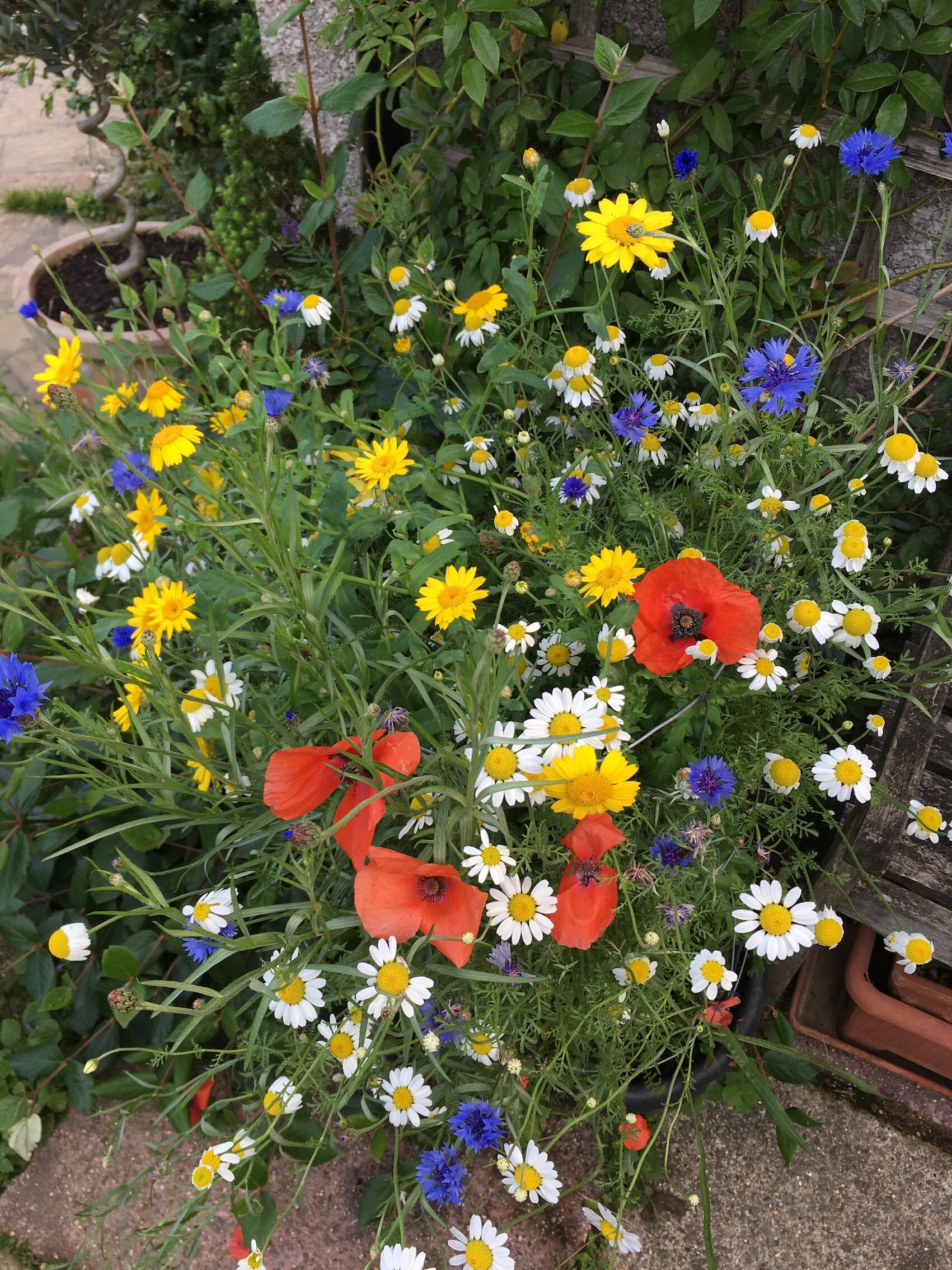
Step 5: Watering, in the Irish way
In Ireland, the trick is usually not “more water”, it’s “right amount, right drainage”.
If it’s been dry for a stretch (yes, it happens), water little and often for 2 to 3 weeks after sowing.
If it’s lashing rain, do not add more water. Focus on drainage and avoiding puddling.
Pots should never sit in a saucer of water.
Step 6: What to expect
Germination can take 1 to 4 weeks depending on temperatures.
Early seedlings are tiny and easy to miss.
Some flowers appear later than others.
If your mix includes perennials, you might get more show in year two, with stronger plants and better flowering.
Common mistakes (and quick fixes)
“I threw them into grass.”
Fix: clear a small bare patch and try again there.
“They disappeared.”
Fix: heavy rain can move them. Press them in firmly and choose a less exposed spot.
“The patch went mossy.”
Fix: it’s often too wet or too shady. Try a brighter, better drained spot, or use pots.
Where not to sow
Stick to gardens, pots, planters, and land you manage. Avoid scattering into the wider countryside or sensitive areas without permission.
Want the simplest success plan?
One small sunny patch. Bare soil. Spring sowing. Light watering if it dries out. Then leave it alone.